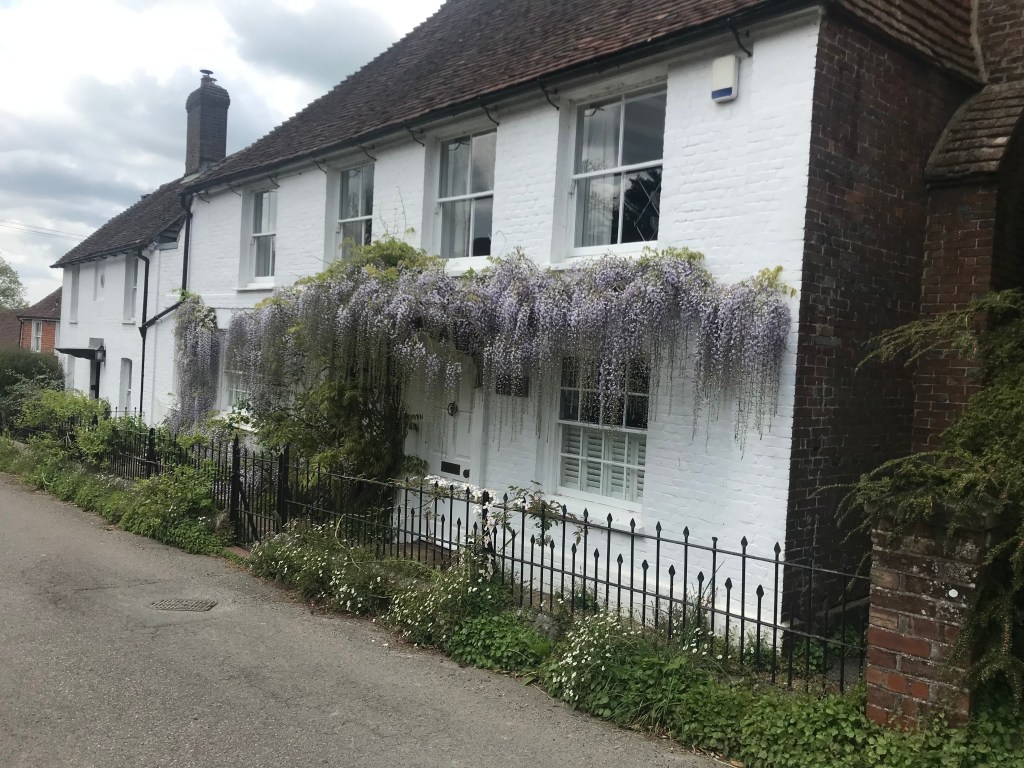
16th c four bay construction; brick façade added early to mid 18thc. More details of the complex history of additions and alterations can be found at MVEHW p309-11, where it is also described as:
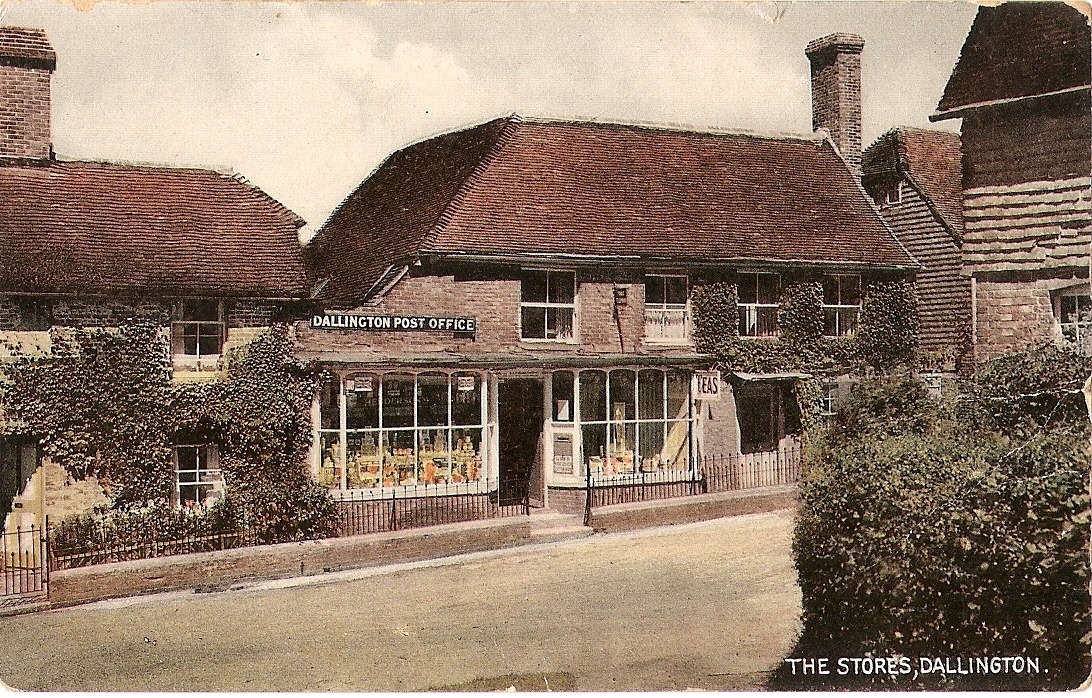
“A freehold of Dallington Manor called Homestall House, described in a 1627 will as a house and orchard. Left to his daughter and then her son Thomas Weller. By 1681, Richard Weller shopkeeper had inherited, succeeded by William Weller, mercer. Land tax of 1745 describes this as ‘the shop house’”
Attached to the southern end of the White House is the White Cottage, probably added mid 18thc, and now a separate dwelling). The building retained its identity as a ‘shop house’ and later post office stores well into the 20th century.
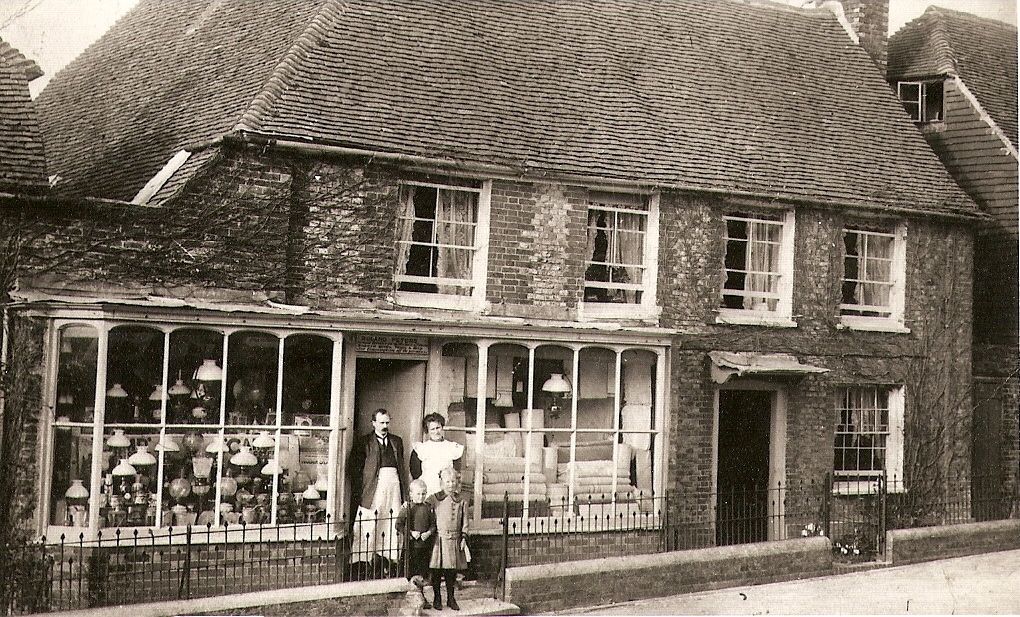
Kellys Directory of 1867 lists Thomas Peters (Samuel’s nephew) as ‘grocer, linen draper & postmaster’. “As well as selling groceries and drapery, Thomas Peters’ shop also housed the Post Office and had a men’s outfitting department and a china and glass showroom. Thomas and his wife Mercy produced seven children; three boys and four girls. During the early 1900s their second son, Roland, became involved in the business. Roland and his wife Mabel and, in time, their two children Mollie and Tom lived in a small house attached to the shop, while his parents and four unmarried sisters lived in the bigger house at the opposite end of the shop. Roland took over the business in 1909, following the death of his father. He was succeeded by his son Roland, who can be seen in the photograph here with his wife and family c1910 outside the shop and an impressive display of oil lamps in the shop window. Tea rooms and a public telephone were added later. In 1912, Roland and his family left Dallington to live in New Zealand. The next shopkeeper at The White House was Mr Sweatman, who added newspapers to the range of goods sold. By 1927 the shop had changed hands again and was being run by Alfred Henry Henderson. Vera Brett (née Friend) used to work in this shop and remembers that if anyone ordered goods that were not in stock, she would have to cycle all the way to Punnetts Town to get them from the grocer there.” (Extract from Karen Bryant Mole Six Miles from Everywhere)
Two of Roland’s sisters ran the Post Office until around 1912 when they transferred the business to another house further along The Street, now known as The Old Post Office. In 1936 when Miss Peters retired, the business returned complete with telephone to The White House then being run by the Henderson family. In 1940 the shop was closed and the Post Office moved finally to its present location at the top of the village on the B2096.
1841 Census
1851 Census
1861 Census Samuel Peters 48 Head Grocer & draper b 1813 Waldron, F Gosling 27 Boarder Housekeeper 1834 Lewes, Charles Budgen 20 Servant Grocers assistant 1841 Newick
1871 Census
1881 Census
| Thomas Peters | 45 | Head | Grocer Employing 2 Men & Draper | 1836 Dallington, Sussex |
| Mercy Peters | 39 | Wife | 1842 Hurstpierpoint | |
| Percival J. Peters Kate E. Peters | 14 13 | Son Daughter | Assistant Scholar | 1867 Dallington 1868 Dallington |
| Louise Peters | 11 | Daughter | Scholar | 1870 Dallington |
| Roland Peters | 9 | Son | Scholar | 1872 Dallington |
| William Peters | 7 | Son | Scholar | 1874 Dallington |
| Winifred Peters | 4 | Daughter | 1877 Dallington |
1891 Census
1901 Census
Thomas Peters 65 Head Grocer/draper 1836 Dallington, Sussex Mercy Peters 59 Wife 1842 Hurstpierpoint, Sussex, Edith Peters 36 Daughter Dressmaker 1865 Dallington, Sussex, Roland Peters 29 Son Grocers assistant 1872 Dallington, Sussex, Winifred Peters 24 Daughter 1877 Dallington, Sussex
1911 Census
1921 Census
Back to The Street & Prinkle listings page
 Dallington History