Origins of the School
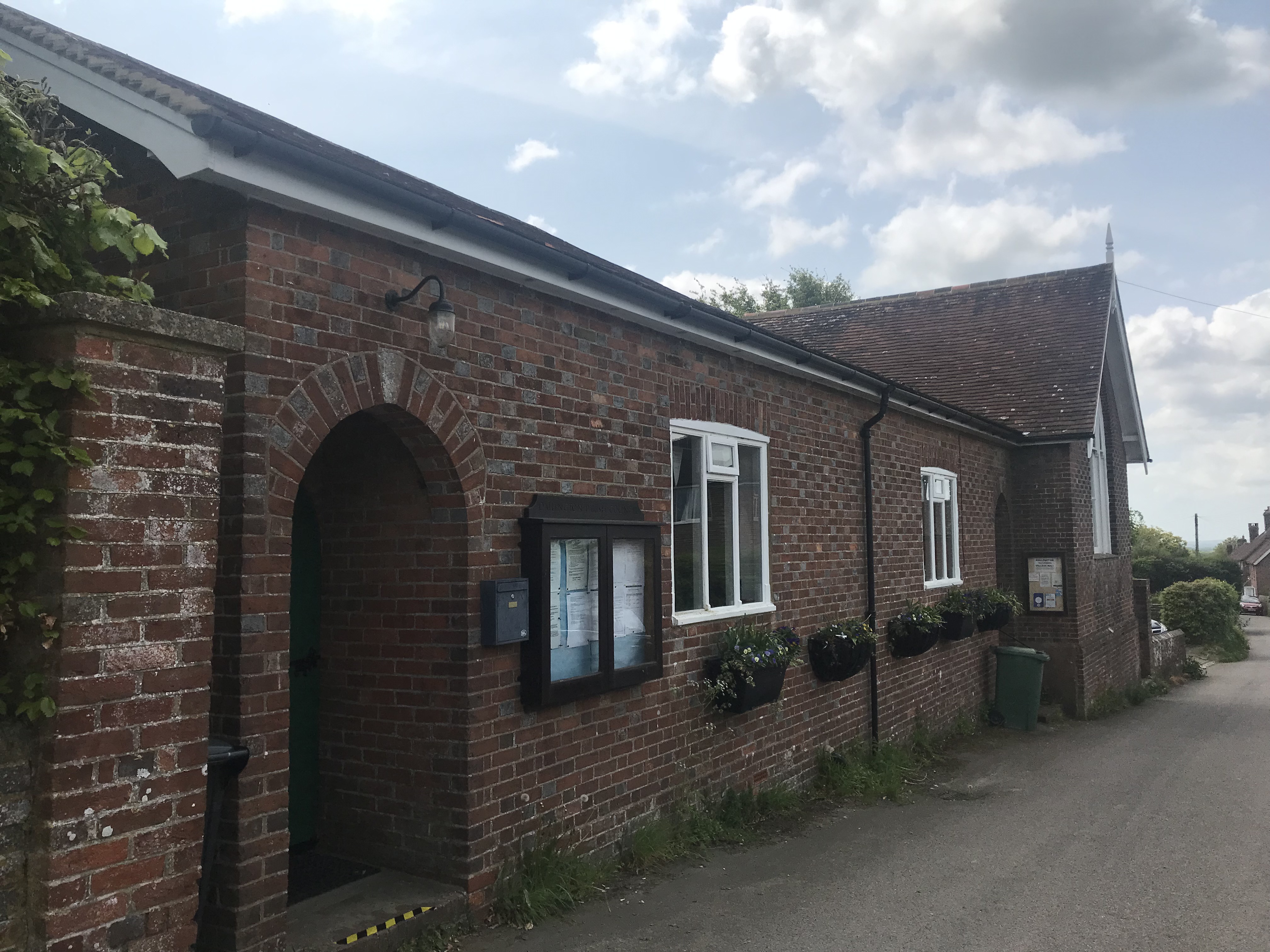
Listed TQ 6419-6519 DALLINGTON THE STREET (south east side)39/9 The Village HallGV II1849. One storey. 3 windows. Red brick and grey headers. Tiled roof. Projection at south end of west front with gable over decorated with crosses and a finial and a large pointed window of 3 lights. Other windows modern.
As the name indicates, our village hall started life as the village school just over 175 years ago. In 1849, Thomas Dray erected a small wooden building on the current site, to be used as a school. The building works were overseen by the new Rector, the Rev R.R. Tatham, and the foundation stone was laid in July 1849 by the Rev George Wagner, who had previously opened a boys’ school for the use of the poor in a room in what is now Church Cottage. The following year he opened a girls’ school in the back parlour of the vicarage.
By 1853 the original building was considered unsuitable, so the vicar and churchwardens bought the freehold site for £100 and a new brick building was erected at a total cost of£244.18s 10d. A plan of the new building described it as“brick walls, tiled roof…substantial nature, good workmanship, very respectable in appearance” However, by 1872 this was in turn judged inadequate by HM Inspectors. Building work began on an extension in September 1872; this added a second classroom, cloakroom and offices. It was built from bricks donated by Lord Ashburnham and opened on 1January 1873. This is the extension you can see at the far end in the photo above.
But by 1909, the school was once again found to be inadequate. The government inspector observed that there were many problems with the school building, including over-crowding, dampness and poor lighting. All 78 Mixed Department children were being taught in a room which was only about 660 sq.ft whilst the 21 Infant children were squeezed into a room that was a little over 270sqft.
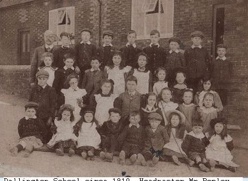
Photograph above c.1910 Dallington school children outside the school with their long serving and very popular headmasterMr Peploe. You can read an account of a talk about Mr Peploe by Roy Iremonger for the History Group
Karen Bryant-Mole recounts that although the building had been condemned the children continued to be taught there for the next few years “…in 1912 there was a dramatic incident, which was recorded in the school log book. At about 2.50p.m.,‘flames were seen issuing from the top of the stove-pipe and the match-boarding in the roof was getting alight. The children were quietly marched out and two men in the vicinity summoned. With a ladder and pails of water the fire was put out and the children returned to their places at 3.30p.m.’Another log entry in May 1913 notes that mice had ‘wrought havoc in the girls’ needle-work’. But by the end of the year construction of the new primary school further up the Street was completed, the children were finally able to move out and the building became available for new purposes.
Change of use
Arguably the other ancestor of our village hall was the Dallington Mutual Improvement and Recreation Society, also known as the Reading Room, which moved into the building after the school moved out. In October1915 the Sussex Express reported that “After occupying the Reading Room in the Street for nearly 33 years, the members of Dallington Mutual Improvement Society have moved to the old Schoolroom, which has been renovated for their reception. There are two rooms, a billiard room and a reading and games room.”
The society had begun in 1882 when the Rev. Ralph Raisbeck Tatham started a reading room for men. Forty years later, Aaron York, the long standing secretary of the Society, recalled its origins in his retirement speech reported in the Sussex Express. Miss Mary Tatham [the Rector’s sister] “had asked him if he would help her to start a society tor the young men of the parish to try and get some room where they might meet for games and social chat instead of loafing about the roads. At first they met monthly in the schoolroom, but towards the end of 1883 Canon Tatham acquired some property in the village street, and built them a room [in the house that is now called Rose Cottage]. From that date the Society had never looked back. Many other institutions had started from the Reading Room; for instance, the Foresters’ Court [successor to the Friendly Society], the old Volunteers, Wood Carving and Singing Classes, and the Band.”
In 1918 Mary Tatham died & left £100 to the Society and in 1920 four permanent trustees (Lord Wrenbury, George Cramp, Herbert Simmons & Charles White) used this money to buy the freehold of the property. It was agreed that the trustees were to allow the Dallington Reading room and Mutual Improvement Society to use the premises as a reading room and club and also to ‘permit the premises to be used for entertainments and meetings for the recreation of thei nhabitants of Dallington and their friends and for charitable or other public purposes and for private gatherings and entertainments’.
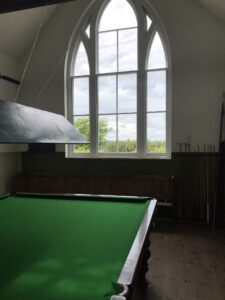
The society apparently opened its doors every night except Sunday. As well as playing snooker and billiards, members played cards, dominoes and draughts. In a 1922 article entitled “Delightful Dallington”, the Sussex Express reported that ‘In the winter evenings the Men’s Institute in the old schoolroom is a popular resort, games of various kinds being provided with a supply of literature, and periodical entertainments which are given for the benefit of the whole community.‘ You can find out a bit more about the Society and particular the Reading Room at this article on Reading in Dallington 100 years ago .
Now managed by a charitable trust, the hall and recently restored Billiard Room continue to be used for village activities to this day. See https://dallington.org.uk/villa ge-hall to find out more.
This page is based on an article originally published in The Messenger magazine in March 2026, and which also draws upon Karen Bryant-Mole’s book, available in full at the Resources page
 Dallington History