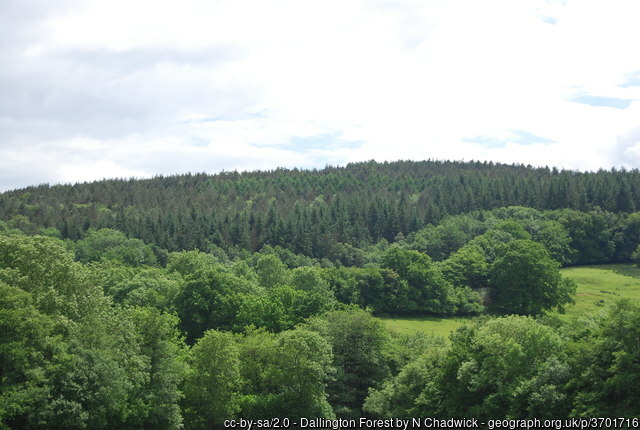
For a fuller account of the history and biodiversity of the Forest, please visit the Dallington Forest Project website at https://dallingtonforest.uk/ from where the following summary is adapted.
Dallington Forest extends across an area of the High Weald in East Sussex, including the ancient villages of Brightling, Burwash and Dallington, in a landscape considered to be one of the best surviving, coherent medieval landscapes in Northern Europe. There are abundant archaeological features within the forest. A survey by Dr. Nicola Bannister in 2016 of a 23 acre compartment highlighted numerous features including wood banks, charcoal hearths, saw pits, quarries and hollow ways. Earlier archaeological surveys by the Wealden Iron Research Group (WIRG) discovered evidence of Anglo-Saxon, Roman and later ironworking.
The Forest has been a utilitarian landscape for centuries providing many different products. As a result most of the features and habitats that exist today are due to the working of the land and that growing upon it. The area has a varied suite of soils and habitats that all interact thus making it enormously important for overall species diversity. “The acidic oak-beech forest and fen alderwood around a gill running through Dallington Forest harbour one of the richest woodland floras in East Sussex”.
 Dallington History