
Subscribe to continue reading
Subscribe to get access to the rest of this post and other subscriber-only content.
Subscribe to get access to the rest of this post and other subscriber-only content.
This article by Roy Iremonger was originally written during lockdown.
With lockdown hopefully coming to an end we can begin to look forward to returning to our local taverns to enjoy that wonderful atmosphere that only places such as these can provide. As I was pondering over these thoughts I recalled a talk I gave at the Dallington History Group on various historic events that have taken place at the Swan Inn at Woods Corner, and this particular story has always stayed with me.
During the early 19th century farming communities were experiencing radical changes that had a major impact on the agricultural classes and were to create serious deprivation within large parts of the Weald. It was not surprising that what became known as the Swing Riots were so prevalent in this area with farms suffering from such events as fires to hay ricks and threshing machines smashed by disgruntled workers who were no longer able to earn enough to support their families.
Whilst distress was spreading across East Sussex the Church was still actively demanding that tithes should continue be be paid to the local vicars. At this time in Dallington, the vicar was the Reverend Thomas Ferris who interestingly enough was actually living in Hawkhurst, Kent., with St Giles, Dallington being officiated by six successive curates.
The following two anonymous letters appeared in a local paper at the time [details of publication still to be confirmed] and were fortunately recorded by Miss Tatham in her journal.
Tithes of Dallington
We have not infrequently urged the baneful effects of the tithe system, and of outrages to which it gives rise. We have also on various occasions pointed out how little is to be expected from the justice of the Clergy, on how much is to be extorted from their rents. In illustration of these positions, we subjoin the copies of two letters received from Dallington in the last few days.
November 7th 1830 “The Rev. Thomas Ferris, rector and Vicar of Dallington held his tithe at the Swan Inn, November 5th. The hour for taking the money was from ten till two; and any one not being there within the hours to pay his money, was to pay for his own dinner. The Parson came at half-past one. He called in one man wished him pay 15 per cent more than last year, which was refused. Then another was called, who was of the same mind, and the Parson said he would not take any. Then the farmers said they could pay for a dinner themselves, and ordered the landlord to take up the dinner.
Then the Parson said he would take the same as last year; but they told him they were going to have dinner then. So in came Mr Parson, bowing and scraping and shaking of hands, because he had not got his money. He sat down to dinner with us; but as soon as dinner was over, he said, “Now I will take your money, and I will have a pipe and something to drink with you afterward” so he then went on taking money. The first one that paid laid down more money than his tithe, not expecting but he would return him his change; but he stopped the money for his dinner, and said he could not afford to give him a dinner. So the rest of us took care to get our money right before we went in; and as soon as he had got his money, he did not say anything about a pipe nor yet anything to drink, but slipped off home, leaving us to pay for our pipe and drink” [Anon]
November 12th 1830 “Dallington—-I take this opportunity of writing to you, as I think you would like to know how we are getting on in our neighbourhood. We held a meeting here on the 10th November to adopt measures we could to satisfy the labouring people. They said they wanted 2 shillings and three pence per day; we agreed 2 shillings, and if other parishes paid more, we would; and with that they were all satisfied. But we told them we did not know how we could get the money to do it; they told us we should go back to the Parson and make him give half the money back; but we told them we were sure that was no use, so they said they would go with us and make him. The farmers and altogether went on the 11th to Hawkhurst, to the Parsons; there were but few in the parish but what went, and he agreed to pay back half what he had received, and he paid all the money he had got, and said that the others who had not paid were to pay only half their tithe.”
Footnote
A fairer Tithe Commutation Act was introduced in 1836.
The Reverend Thomas died 1848 age 66. In 1849 the Reverend Ralph Tatham became the new rector of St Giles Church which was in such a poor state of repair that it was eventually rebuilt in 1864.
The second letter is all the more remarkable as it suggests that almost all the population of Dallington travelled to Hawkhurst (“there were few in the parish but went”). It is hardly surprising that, faced with such a large number of villagers, the vicar decided to give the tithes back.
Perhaps when we are again fortunate enough to return to the Swan Inn to dine or partake of a glass of their favourite tipple I hope some of us will quietly raise a glass to remember that day 190 years ago when those Dallington men crossed this space to pay their tithes. Roy Iremonger
2024 update by web editor: I am currently transcribing some of the information from the Tithe Apportionment Map 1842, compiled in response to the 1836 Tithe Commutation Act mentioned above, which contains fascinating information about owners and occupiers of every parcel of land in the parish, and detailed assessments of the value of the different kinds of produce owned on each. The map itself can be viewed for free at The Keep (East Sussex archive) website at https://www.thekeep.info/collections/tithe-maps/, but full records are only available to subscribers to The Genealogist ( https://www.thegenealogist.co.uk/ ). I hope to use it to supplement some details about individual houses in the Places section of this site.
Note: Census entries often just give address as Woods Corner without specifying the house. So this page will include multiple households for some years (identified by numbers on census returns). If we can identify the house they will be added/moved later.
| James Harmer | 49 |
|---|---|
| Lorraine Harmer | 43 |
| Charles Harmer | 14 |
| Percy Harmer | 12 |
| Clifford Harmer | 9 |
| Mary Harmer | 8 |
| Fred Harmer | 4 |
| Edward Harmer | 2 |
| Regie Harmer | 5/12 |
This is part of a project to use census and other records to list everyone who has lived in each house in the village; in some years, individual houses were not identified so are listed under the road name used by the enumerator.
(follows on from Woods Corner & Prospect House; numbers as per enumeration sheets)
After the mobile library service closed down, the Dallington Old School village hall committee decided to start a weekly community library cafe to fill the gap. We knew that the hall had once served as a Reading Room so it seemed an appropriate activity. (You can read more about the library cafe here https://dallington.org.uk/village-hall/).
A little while later, when clearing out a cupboard in the Snooker Room which had been badly affected by damp in the past due to an old leak in the ceiling, we found a small collection of books almost entirely covered in mould and some of which had also been nibbled by mice (or very large bookworms). However, we were delighted to find that one of these was a note book which had clearly been used to record Reading Room book loans in 1921.
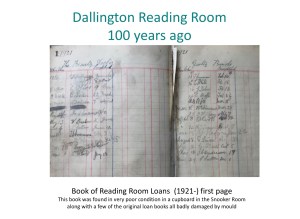
I took the notebook home to try to clean it up – a few days in the freezer to kill the mould spores, and a careful wipe with a cloth, and I was able to photograph all the pages to enable us to do some further research. It was fascinating to find out more about the regular borrowers and what they were reading in 1921.
I was intending to give a talk for the Local History society about this but that was cancelled due to Covid. So as part of this year’s National Village Halls Week, which is celebrating 100 years of village halls, I thought I’d post a very short introduction to the Reading Room and what our forebears were reading 100 years ago. You can read it here
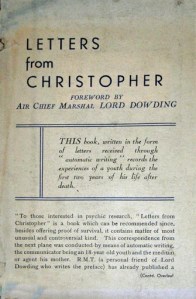
For the first History Group meeting of 2020, Roy Iremonger spoke about the short life of Christopher Guy Tristram (1925-1943), his parents’ strong spiritualist beliefs and the private publication of letters supposedly dictated via ‘automatic writing’ to his mother from beyond the grave.
At the outbreak of war the family were living at Cox’s Mill, Dallington. His father was Major Guy Tristram R.A. and his mother, Ruth Marie Tristram a botanical illustrator. Christopher and his younger brother were sent to stay with an uncle in America, but after the uncle died, Christopher, now old enough to enlist, decided to return. He was drowned when the ship he was travelling on was sunk by German U-boats.
Roy offered a sympathetic account of the attraction of spiritualist beliefs to the bereaved parents, and set these within the context of the period following the First World War, when surprising numbers of people, including scientists, writers such as Arthur Conan Doyle, and even Air Force Marshall Lord Dowding (a friend of the family who wrote the foreword to “Letters from Christopher”) shared these beliefs.
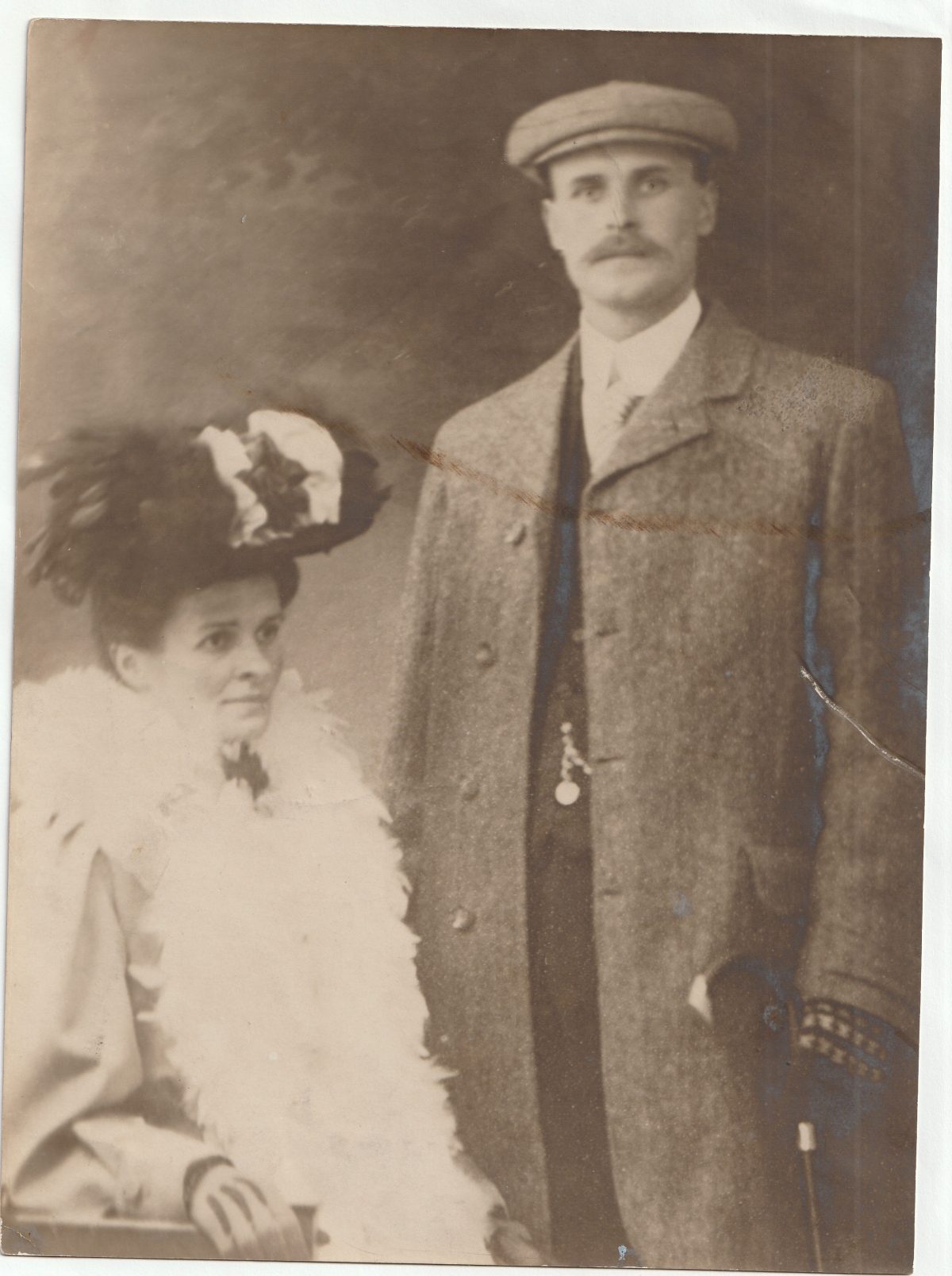
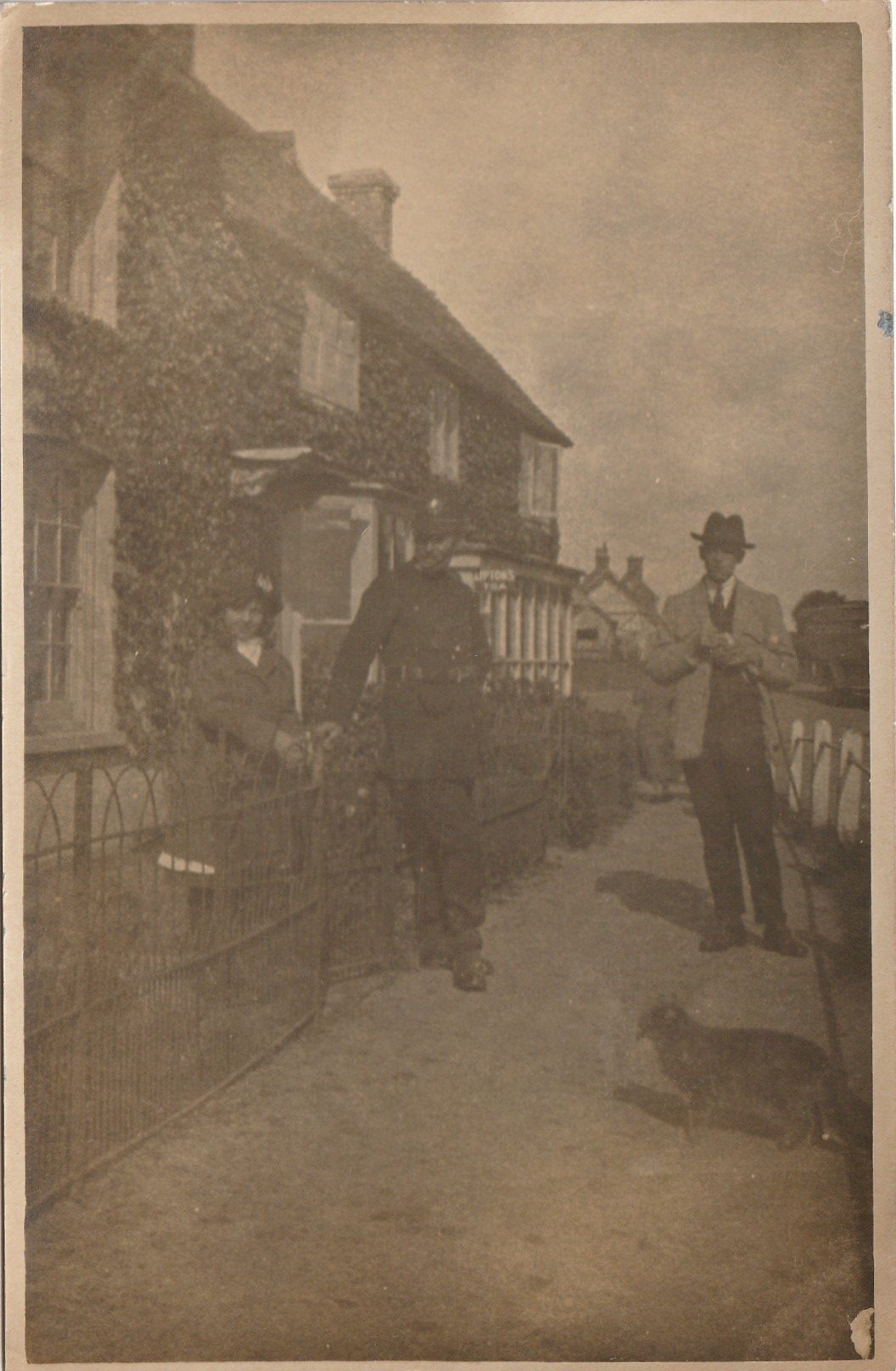
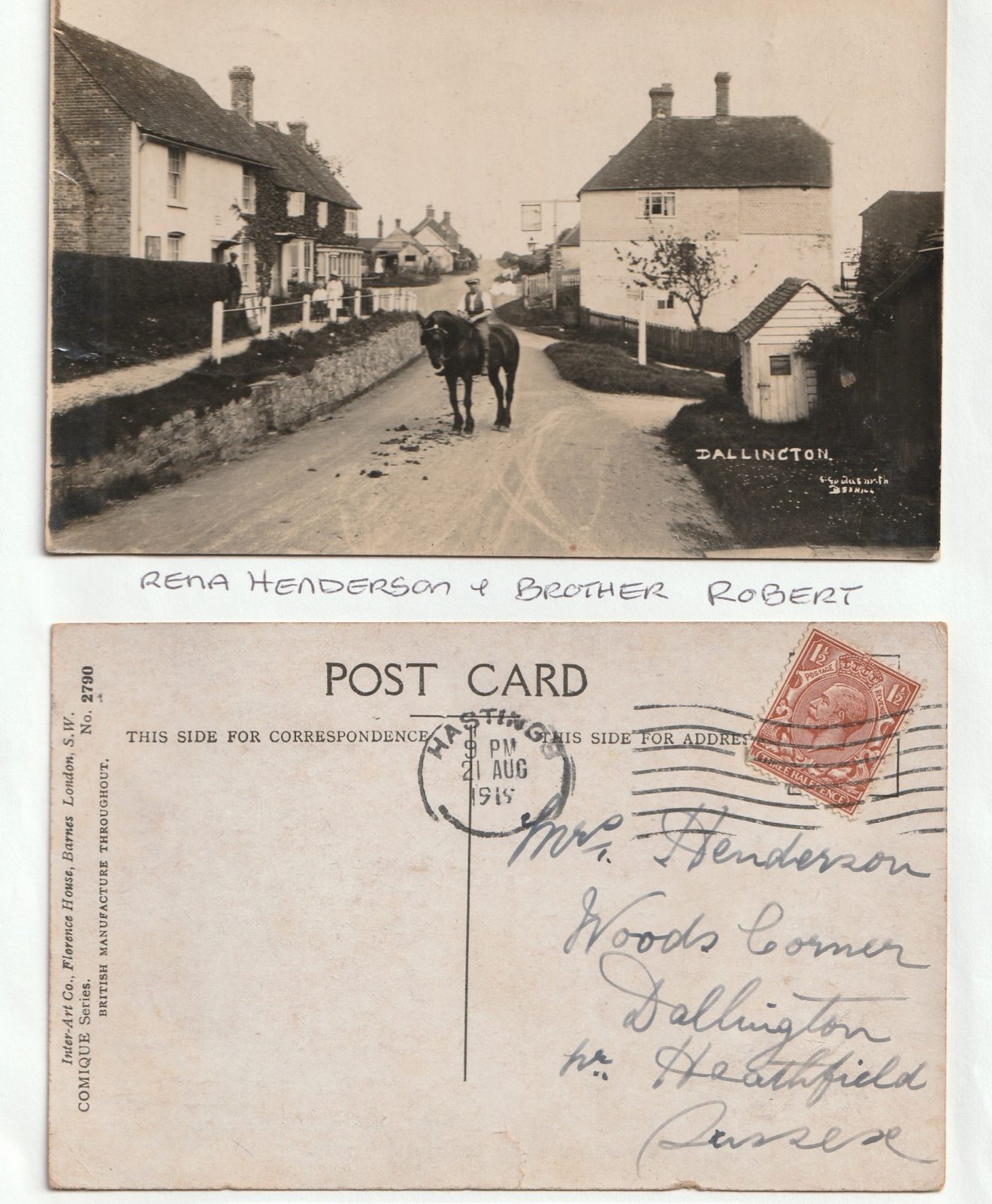
Here are some photographs of PC Angus Henderson and his family, kindly shared with us by one of his descendants. Angus Henderson was born in Scotland in 1873, but by 1898 was in Sussex, when he married Harriett Sherlock in Heathfield. They were in Rye at the time of the 1901 census, Chiddingly in 1911, with a growing family, and seems to have been based at the Police House (now Graylings) at Woods Corner, Dallington by 1915.
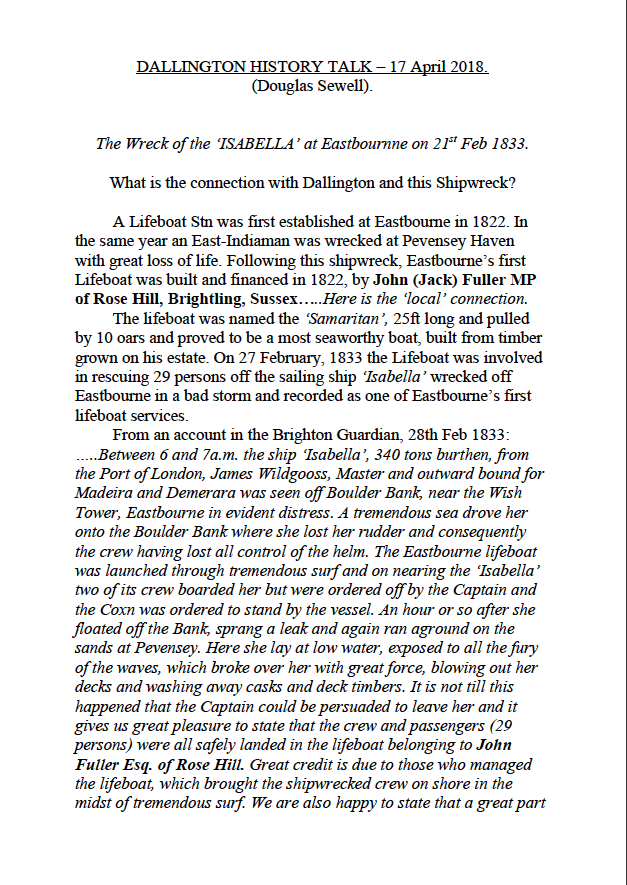
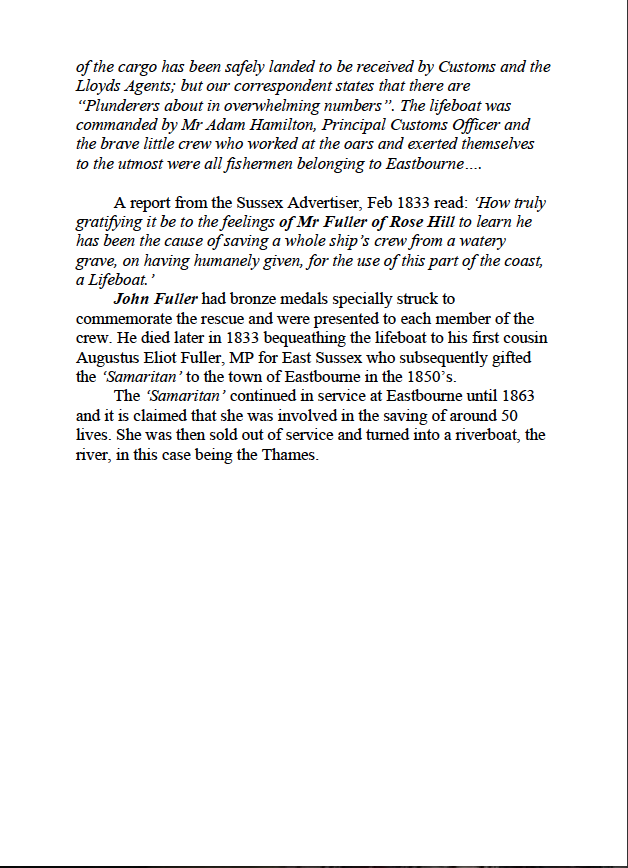
Here is an extract from Douglas Sewell’s recent talk on shipwrecks with a local connection

Roy Iremonger gave the first History Group talk of the year, on the subject of Mr Peploe, the headmaster of Dallington School for many years. As usual, Roy was entertaining and informative.
William James Peploe was born 1859 in Stourbridge, Worcestershire and went to school in Wolverhampton where he became a pupil/teacher. In 1884, he and his sister Marianne came to Dallington in 1884 where both were to remain for the rest of their lives. Many years later he wrote his memoirs, from which Karen Bryant-Mole drew (in her book “Dallington, Six Miles from Everywhere”) for this description of their first 24 hours:
“He and his sister lodged with a Miss Gosling, although he did not say which Miss Gosling. He found his hostess and her home cold and inhospitable. Miss Gosling was a pious woman, with an unwelcoming demeanour and a fondness for lengthy prayers. When Mr Peploe and his sister came downstairs on their first evening Miss Gosling pronounced grace in a sepulchral voice, before showing them into a sitting room warmed by a fire containing a single stick of wood. At about 9pm a tray containing two bits of bread and cheese, two glasses and a bottle of water were brought in and the guests were gravely informed that supper was ready.” Mr Peploe was later to recall: ‘The thought of it makes me shudder to this day.’ They attended church the next morning. They were stared at as if they were “a pair of menagerie animals.” No one came forward to greet them or welcome them. After a dinner of cold beef and cold potatoes they attended the afternoon service when, again, no one spoke to them. Mr Peploe described these first 24 hours as the most miserable of his life.”
Fortunately things seemed to have improved after that, and Mr Peploe went on to serve as head teacher at Dallington from 1884 until 1923 during which time he never took a day off with sickness. For most of that period, the School was located in what is now the village hall (though still known as the Old School) and it is hard to imagine the building having 78 children in the mixed department and 21 infant children in the adjoining room. A new school was eventually built further up The Street, opening in January 1914 and Mr Peploe remained as head until his retirement in 1923. On his retirement he received a gold watch from his sporting friends; a gold chain from his school children and £61 from the parishioners. He died in October 1931. He appears to have been a much admired if opinionated and sometimes interfering figure in the village life. You can find much more information and quotations from Mr Peploe and local residents and newpaper articles in Roy’s notes for the talk, which he has kindly allowed me to share here. Iremonger Mr Peploe talk March 2018
 Dallington History